I grew up in a house that faced the beach, close enough that the ocean felt like another room of the house, a loud, breathing presence. Out the door we would run, my parents and I, smiling and unprepared, as if the shore were an emergency we had to answer immediately. The air always arrived first: salt-sharp, clean enough to sting. The sand gave way beneath my feet, each step a small collapse, my body learning early that nothing solid stays solid for long. Waves crashed with a confidence that made me feel both greeted and erased. On windy days, the air shoved at my ears so hard I couldn’t hear myself think, as if thought itself were something light enough to be blown away.
The beach taught me how noise can feel like joy. It was everywhere, unavoidable, democratic. No one could own the sound of the ocean. It entered your body whether you wanted it or not. Sometimes I believed that was love.
Or maybe I did. The ability to hear others was not with me, and everything sounded as if it was all happening beneath the tide. The world began to dull, to thicken. Voices reached me as if they had traveled a long way through water, warped and softened, stripped of their edges. I watched mouths move and guessed at meaning. I nodded too much. I smiled when I shouldn’t have. Everything sounded underwater—my parents calling my name, my own breath, the ocean I had trusted to be loud and clear. I couldn’t listen the way others listened, and so I stopped trying to speak. Words felt useless if they couldn’t arrive whole.
Silence can be violent. That you can drown without water. That even a child raised by the sea can forget how to surface, how to ask to be heard, how to believe that someone will listen.
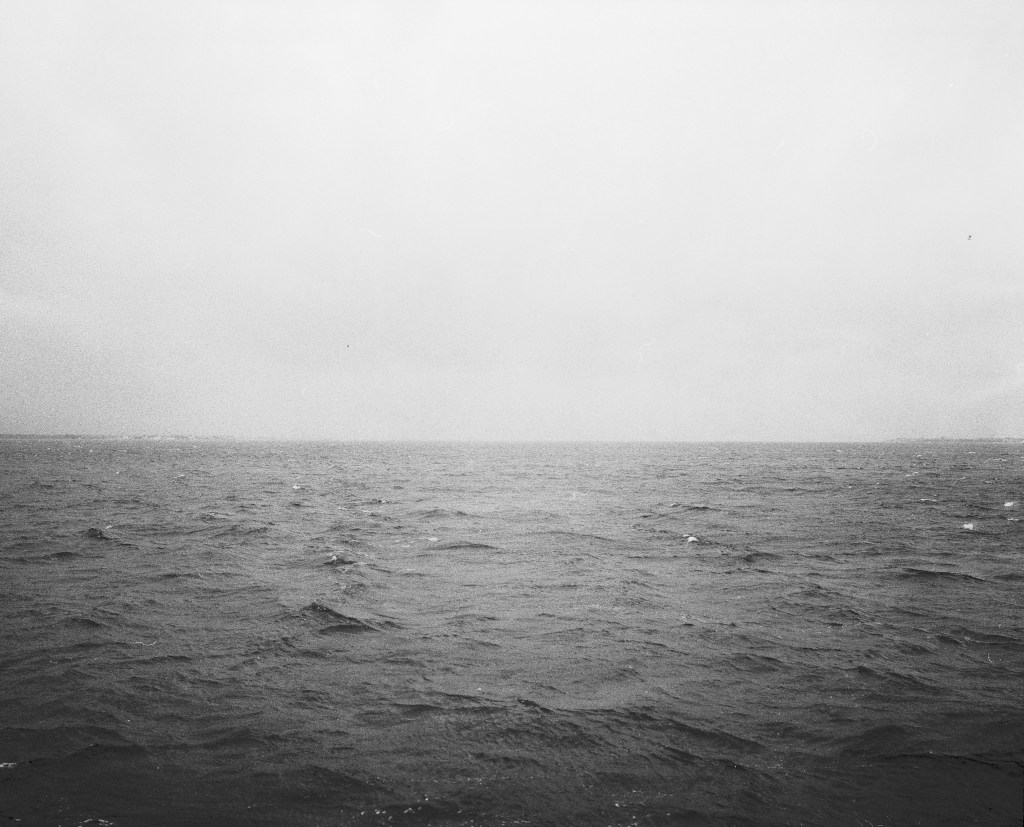
Half of a lifetime later, I managed to see the ocean on the other side of this continent, and so far it looks the same. I saw her at the shore on a day when the weather refused to be kind. The sky was gray in every direction, not dramatic, just endless, as if color itself had given up. The wind was violent, the kind that doesn’t move around you but through you, rearranging your thoughts. Her hair went everywhere at once, an argument with gravity, a refusal to stay neat. She stood there steady anyway, feet planted in sand that kept trying to leave her, mouthing words into the storm.
Without question I remember thinking that she was the most beautiful woman I had ever seen. Not because the scene was romantic. It wasn’t. It was harsh and loud and unphotographable. But beauty, I learned then, doesn’t require cooperation from the weather. I couldn’t hear what she was saying. The ocean crashed too hard, the wind tore the sound apart before it reached me. Her words arrived only as shapes, as intention. Still, I was utterly confident—strangely, peacefully confident—that what she was saying came from love. Not the careful kind, not the rehearsed kind, but the kind that insists on being spoken even when it knows it might not be understood.
I watched her speak anyway. Watched her trust the distance between us. Watched her believe that meaning could survive noise.
Now she exists only as memory: gray sky, wild hair, the ocean interrupting everything. I replay the moment obsessively, trying to lip-read the past. I want so desperately to know what she was trying to say. I want to recover the sentence the sea stole from me. Maybe it was something simple. Maybe it was everything. Maybe it was the kind of truth that only gets said once, when the wind is loud enough to take the blame.
What haunts me is that I couldn’t hear her. She was saying something, and I am still listening.
 Brandon Gehres
Leave a comment