I wake up and my first thought is not gratitude, not even complaint, but a tired arithmetic: Not another sunrise. As if the sun were a bill I forgot to pay yesterday and now it has arrived again. Morning light spills across the wall like a reminder I didn’t ask for. I lie there listening to the loft make its small noises—pipes, wind, the internal wind rehearsing—and I am already exhausted by the prospect of another day that will ask me to be interested. Another day that will require me to pretend curiosity is renewable.
Evenings frighten me more. Not because they are dark, but because they are quiet. Bedtime arrives like a blank page that refuses to become anything else. Dreams, when they come, are dull reruns: conversations I’ve already survived, rooms I’ve already left. I used to think boredom was a luxury, that is, proof that nothing was wrong. Now it feels like today’s greatest monster. We no longer tell stories about dragons or giants because we have engineered them out of the wild. The beast that remains is this flatness, this long corridor of hours where nothing lunges at you, nothing surprises you, nothing even hurts in an interesting way.
I am bored in a way that feels deep, the kind that hollows out enthusiasm and leaves the shell intact. I pick up the books I once loved and they weigh too much in my hands. Music plays and it is only sound, not a transport. Ideas arrive and immediately apologize for themselves. I remember when interest felt involuntary, like breathing. Now I have to schedule it, coax it, threaten it. I am embarrassed by how much effort it takes just to care.
And I am a teacher. This is the quiet shame I don’t often say aloud. If the teacher is bored, what happens to the room? How do you invite others into growth when you feel static, when your own imagination has called in sick? I stand in front of people and ask them to push themselves toward insight, toward difficulty, toward beauty, while privately wondering where my own hunger went. I can describe the terrain of curiosity from memory, like someone explaining a city they moved away from years ago. I.e., Modesto, California. The directions are accurate, but I no longer live there.
Boredom has teeth because it eats meaning without leaving a mess. It does not roar, but hums. It convinces you that your attachments were flimsy to begin with. I look at the things I once clung to, such as people, ideals, projects, and feel the loosening. There is a terror in that, but also a strange clarity. We are all more devoted than we admit. We all kneel somewhere. The danger is not devotion itself but the carelessness with which we choose it.
I used to believe love alone could be an altar. I thought one person could hold the weight of my seriousness, my willingness to endure. Now I see how reckless that was. People are not stable structures. They change, leave, hesitate, get sick, lie, grow tired, betray you, or put their love and attention somewhere else. To build your entire faith around a single human being is to misunderstand them and time. It is to ask something finite to behave like it is eternal. That kind of attachment feels romantic until it collapses, and then it feels like madness disguised as loyalty.
We all attach ourselves fiercely. To lovers, to nations, to ideas, to classrooms, to versions of ourselves that no longer exist. The question is not whether we will become fanatical, but where. What will outlast us? What can absorb our seriousness without breaking? A cause can survive our moods. A practice can carry us when enthusiasm evaporates. A commitment to learning, the kind that admits boredom as part of the curriculum and that might be sturdier than passion alone. I am trying to learn how to teach from this place, not by pretending boredom isn’t here, but by naming it as part of the work. Growth does not always feel like fire. Sometimes it feels like staying in the room when nothing sparkles. Sometimes it feels like choosing to care before you feel cared-for by the world. I tell myself that presence can precede excitement, that curiosity can be rebuilt from discipline, that showing up is not hypocrisy even when joy is absent.
Still, some mornings the sun feels like an accusation. Some nights the bed feels like a waiting room where nothing happens. I am frightened by how easily days can blur into one long, colorless sentence. But I am also beginning to understand that boredom is not proof of emptiness; rather, it is proof of survival in a world that no longer tries to kill us with monsters. The task now is subtler and harder: to choose what deserves our attention, to build attachments that can endure change, to teach not from endless enthusiasm but from honest persistence.
I wake up. The sun is there again, and I do not love it. I acknowledge it. I get out of bed anyway. I gather my seriousness carefully, like something fragile but necessary, and decide where to place it.
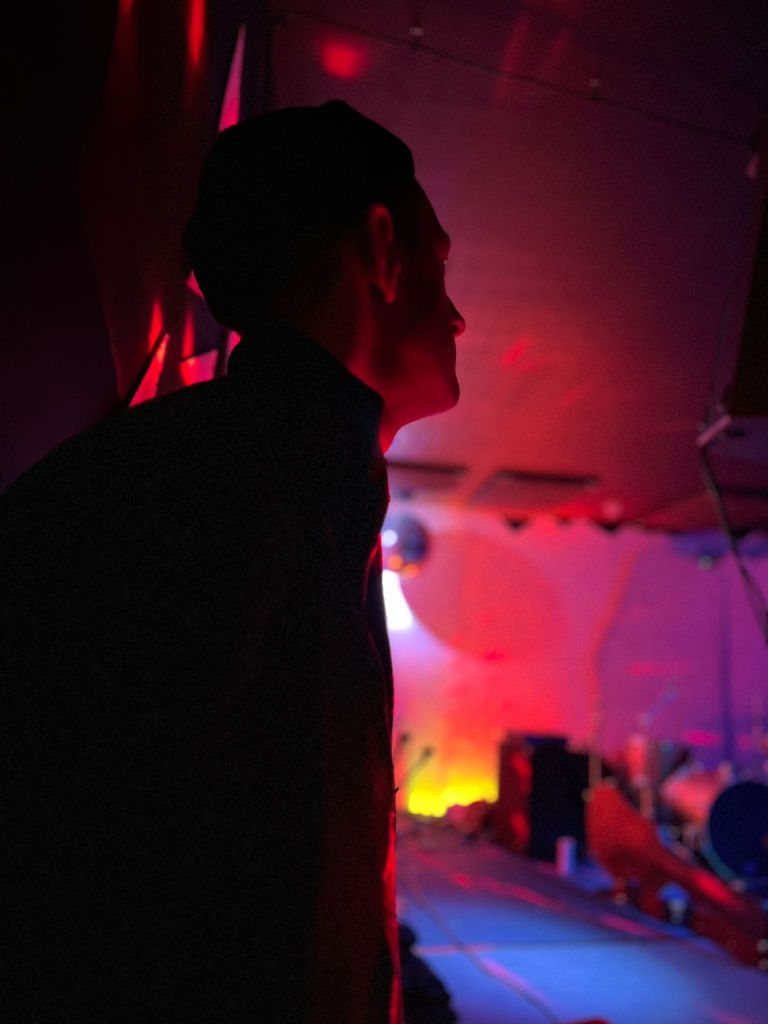
 Brandon Gehres
Leave a comment