• I grew up in a house that faced the beach, close enough that the ocean felt like another room of the house, a loud, breathing presence. Out the door we would run, my parents and I, smiling and unprepared, as if the shore were an emergency we had to answer immediately. The air always arrived first: salt-sharp, clean enough to sting. The sand gave way beneath my feet, each step a small collapse, my body learning early that nothing solid stays solid for long. Waves crashed with a confidence that made me feel both greeted and erased. On windy days, the air shoved at my ears so hard I couldn’t hear myself think, as if thought itself were something light enough to be blown away.

    The beach taught me how noise can feel like joy. It was everywhere, unavoidable, democratic. No one could own the sound of the ocean. It entered your body whether you wanted it or not. Sometimes I believed that was love.

    Or maybe I did. The ability to hear others was not with me, and everything sounded as if it was all happening beneath the tide. The world began to dull, to thicken. Voices reached me as if they had traveled a long way through water, warped and softened, stripped of their edges. I watched mouths move and guessed at meaning. I nodded too much. I smiled when I shouldn’t have. Everything sounded underwater—my parents calling my name, my own breath, the ocean I had trusted to be loud and clear. I couldn’t listen the way others listened, and so I stopped trying to speak. Words felt useless if they couldn’t arrive whole.

    Silence can be violent. That you can drown without water. That even a child raised by the sea can forget how to surface, how to ask to be heard, how to believe that someone will listen.

    Half of a lifetime later, I managed to see the ocean on the other side of this continent, and so far it looks the same. I saw her at the shore on a day when the weather refused to be kind. The sky was gray in every direction, not dramatic, just endless, as if color itself had given up. The wind was violent, the kind that doesn’t move around you but through you, rearranging your thoughts. Her hair went everywhere at once, an argument with gravity, a refusal to stay neat. She stood there steady anyway, feet planted in sand that kept trying to leave her, mouthing words into the storm.

    Without question I remember thinking that she was the most beautiful woman I had ever seen. Not because the scene was romantic. It wasn’t. It was harsh and loud and unphotographable. But beauty, I learned then, doesn’t require cooperation from the weather. I couldn’t hear what she was saying. The ocean crashed too hard, the wind tore the sound apart before it reached me. Her words arrived only as shapes, as intention. Still, I was utterly confident—strangely, peacefully confident—that what she was saying came from love. Not the careful kind, not the rehearsed kind, but the kind that insists on being spoken even when it knows it might not be understood.

    I watched her speak anyway. Watched her trust the distance between us. Watched her believe that meaning could survive noise.

    Now she exists only as memory: gray sky, wild hair, the ocean interrupting everything. I replay the moment obsessively, trying to lip-read the past. I want so desperately to know what she was trying to say. I want to recover the sentence the sea stole from me. Maybe it was something simple. Maybe it was everything. Maybe it was the kind of truth that only gets said once, when the wind is loud enough to take the blame.

    What haunts me is that I couldn’t hear her. She was saying something, and I am still listening.

  • We sat at a table that had learned how to hold us. It was wide enough for plates and elbows and the careful spill of a morning that had no intention of rushing. Brunch arrived: coffee steaming, two breakfast burritos sliced, butter melting as if it understood time better than we did. The conversation moved the way water does when it is glad to be water. Lively, but also listening. Insight folded into humor. A thought offered, and another returned brighter. We laughed—not to fill silence, but because the conversation asked for it. Everything felt copacetic, a word that suddenly made sense in the body, not just in my head.

    The light leaned in. It filtered through dusty glass: dust and the modest ambition of the hour, casting warm colors that seemed borrowed from late afternoons and forgiven summers. Gold pooled at the edges of plates. Blue touched her hands. Even the shadows were kind. I then noticed the few gray hairs threading her head like annotations in a beloved book—evidence of time spent thinking, loving, enduring. They gave me a strange sense of victory, not over her, but over fear: I had not yet found one on my own head. Time had reached us unevenly, and for once, that felt like a gift. I realized how calm I was. How my shoulders had dropped without being asked. How my breath had slowed to match the pace of her words. There was no armor on me, no performance. Just this: the astonishing fact that this is the person I will be with until who knows when—hopefully until I die. The thought did not frighten me. It steadied me. It felt like standing on ground that recognizes her weight.

    I tried to remember the last time I was this happy and failed. The memory would not surface. Instead, there was only this electric quiet, this thrilled and gently nervous joy, this table holding us while we learned how good it can be to stay.

    Some time has gone by before I return to the same table as if it might remember me, as if the grain of the wood could recognize the weight of my absence and make room for it. The chair feels too honest. Without her, the surface offers nothing to lean into. I sit, then unravel. My hands clasp themselves the way strangers do in waiting rooms—too tight, too deliberate—and my knuckles blanched as if I could anchor myself there. I cannot recognize the me that was there then, and I wish I could tell myself then that I should be savoring the happiness in the moment, not replaying the great happiness later.

    The window is still dirty. I cannot stop noticing it now. A smear catches the light and fractures the morning into something I don’t trust. I wish someone would clean it, though I know what I’m really asking for is clarity, or mercy, or a reason this hurts more than it should. My eyes fill. Tears arrive quietly, practicing restraint. They fall without witnesses. Everyone else is busy being themselves—laughing, scrolling, entertaining.

    Maybe what I am left to find is relief in this invisibility. Life is easier once you accept that no one is paying attention to you, that your fracturing does not interrupt the room. But I am still nervous. Still afraid. “Everything I let go of has claw marks.”

    A crisis does not manifest all at once; it accumulates. It is built from the moments I did not love well, from the sentences I never learned how to say aloud. It grows quietly while I am distracted, convinced that if I watch enough, read enough, stay busy enough, something will click into place. I fill my hours with stories that resolve themselves, hoping they will tutor me into completion. But the screen goes dark, the book closes, and I am still here, measuring my life against an unfinished ledger. Entertainment dulls the edges, but it cannot teach me how to begin.

  • I lie in the bathtub long after the steam has gone, after the water has learned the language of the room and gone flat and honest. The faucet has stopped speaking. The light hums. The water cools without notice, and I do not flinch. I tell myself I am resting, that this is recovery, that stillness has earned its own vocabulary. My knees rise like small islands. Soap thins into grayish halos, dragging today’s dirt into slow constellations. I watch them drift and feel an affection I do not trust.

    Cold creeps in politely at first, touching my ankles, my wrists, the nape of my neck, asking permission I never give. I am too busy rehearsing the effort it would take to leave. Standing feels like a choice with consequences. The air beyond the porcelain edge waits, round and articulate, full of tasks and gravity. In here, the water holds me in a shallow embrace, asks nothing, accepts everything. It is easy to be forgiven by something that has no memory. I become accustomed to the chill the way one becomes accustomed to a disappointing truth. It stops talking about itself. My skin learns to blur its own signals. I think about how comfort can be a form of quiet harm, how the body can negotiate with neglect if it’s offered slowly enough. The bathwater grows tired of being clean. It carries my shed hours, my loosened thoughts, my small refusals to move on. I float among them like evidence.

    I don’t like how well I belong here. How the cold doesn’t chase me out, how the dirt doesn’t disgust me, how the stillness doesn’t ask me to improve. I know that staying is a kind of practice. I know that leaving would feel like betrayal—to the water, to myself, to the fragile calm I’ve built from not choosing. Eventually, my fingers wrinkle into maps of time passing, and even then I hesitate. I am learning how easy it is to endure what is wrong when it asks so little.

  • As a child, I loved the way herbs and flowers grew with no regard for the smallness of my hands. I pressed seeds into soil the way other children pressed coins into wishing wells, believing that patience itself was a form of devotion. The garden was never large, but it felt great to me—rows of basil and thyme breathing out their quiet assurances, mint threatening to take over if left unattended, chamomile bowing its small heads in agreement with the sun. And there, always there, were the marigolds. They were impossible to ignore. They burned in the dirt like small suns, like a declaration that brightness could be practical, that beauty could also be useful.

    I prized the marigold above all others. Not because it was delicate—it wasn’t—but because it knew its role and performed it generously. The marigold did not ask permission to protect the rest of the bed. It repelled what would harm, drew in what would help, and stood as a boundary without becoming a wall. Its scent was sharp, almost medicinal, as if to say love does not always smell sweet. Sometimes it smells like assertion. Sometimes it smells like warning. I wanted to grow up and be a marigold. I wanted to take on its discipline and its warmth, its ability to stand close to others without overshadowing them.

    I imagined myself as a teacher like a marigold—present, steady, planted at the edge of uncertainty. I wanted to believe that simply by being there, by showing up every day in the same place with the same commitment, I could make learning safer for those around me. I wanted my presence to deter fear, to keep pests of doubt and cruelty at bay. A marigold does not shout instructions. It teaches by example, by persistence, by refusing to wilt at the first sign of heat. And I wanted to be a family member like a marigold, rooted and reliable. I wanted to contribute without needing praise, to nourish the shared soil rather than compete for light. Marigolds do not hoard resources; they make space for others to thrive, and they understand that belonging is not about dominance but about balance, about knowing when to stand tall and when to let another stem catch the sun.

    Most of all, I wanted to be a lover like a marigold. I wanted to be protective without being possessive, vivid without being overwhelming. I wanted to offer warmth that did not scorch, attention that did not suffocate. Marigolds love outwardly. They love in a way that benefits more than just the one they are closest to. Their affection radiates, and the whole bed is healthier for it.

    It hurts me to think that I have never been a marigold. That I have sometimes failed to protect, failed to nourish, failed to stay when staying mattered most. I think of the people I have hurt—through absence, through sharpness, through my inability to root myself fully in care—and I want to apologize. I am sorry I did not know how to be useful in the ways that matter quietly. I am sorry I mistook brightness for enough.

    And still, I set my eyes on it. I am now a man who kneels in the dirt of who I am and press the seed in again. I tell myself that marigolds are not born complete; they grow into their purpose. They learn the shape of the sun by reaching. If I cannot be a marigold now, I can practice becoming one—learning how to stand close, how to protect without harm, how to love in a way that leaves the ground better than I found it.

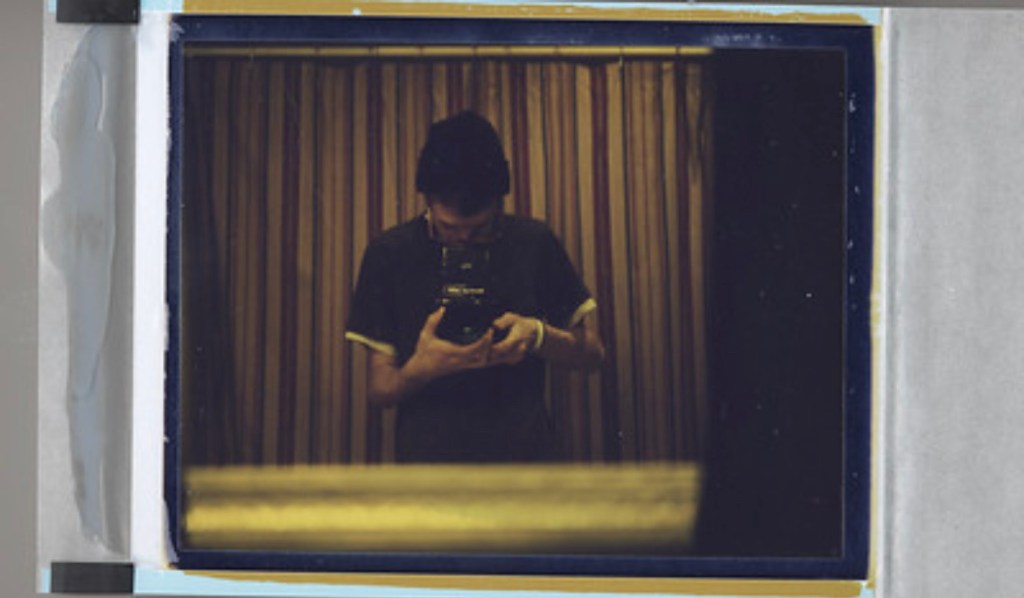
  • I have made so many photographs in my life that the number loses its edges. Tens of thousands, maybe more, each one a small decision to notice, to frame, to say this mattered enough to stop time for it. If I gather the hours I spent in the darkroom—standing, waiting, breathing the chemical tang of fixer and developer, hands stained into permanence—they would accumulate into months. Entire seasons lived under safelight. Months of my life spent coaxing what was invisible into an image, persuading light to confess what it had touched.

    In the darkroom, the delicate becomes formidable. The sun, which burns and vanishes so quickly in the open world, learns to stay. Light that once slipped through asked to hold still, to endure darkness long enough to be seen. I mixed solutions like a kind of prayer—measure, pour, stir, wait—knowing that precision mattered but so did patience. Too long and the image would drown into a fog. Too short and it would remain a ghost. I learned that photographs are not taken; they are negotiated.

    I watched images appear the way language does when you finally find the right word. Slowly, reluctantly, as if unsure they wanted to exist. A pale suggestion first, then it materializes. I learned to trust that what I could not yet see was still there, suspended in silver halides, waiting for the right conditions to reveal itself. Faith—not from doctrine, but from trays of liquid in the dark.

    I spent hours bent over microscopes, studying the grain of silver, those constellations of chance that hold an image together. Focusing and unfocusing, discovering that sharpness is not the same as clarity. The grain taught me humility. No matter how carefully I exposed the frame, there was always randomness, always something beyond control. The image was never only mine. It was the result of light, chemistry, time, and my own imperfect hands. Creation was collaboration.

    After all of this—after enlargers and meters and lenses heavy as declarations—I stepped into a camera obscura. I did not know yet what I was seeing, only that the world had entered a room and laid itself gently across the walls. The ocean was toward the ceiling. People floated upside down. Clouds drifted, silent and astonished, across plaster. The image moved without my permission. It breathed. It did not need to be captured to be real. The world wants to be seen, and I stepped into a camera.

    I stood there, inside that quiet miracle, watching light translate itself without effort. No shutter, no film, no chemicals. Just a small opening and patience—stay long enough for my eyes to adjust. The image was fragile, temporary, already disappearing as soon as I noticed it, and yet it felt complete. Whole. I remember thinking that seeing could be an act of receiving rather than taking. Still, I chased mastery. I carried gear that weighed as much as certainty. Cameras that promised precision, lenses that bent the world obediently. I believed that if I owned the right equipment, I would finally deserve the images I loved. I measured myself in stops and focal lengths, in sharpness charts and brand names. I confused complexity with depth, control with devotion.

    But every photograph I loved most came from something quieter. A moment when I forgot the camera and remembered my own attention. A frame guided not by settings but by longing. What I was really trying to preserve was not light, but feeling—the ache of noticing, the tenderness of attention. The equipment was never the source. It was only a conduit.

    Now I understand that the darkroom was teaching me something else all along. That what develops in darkness comes from what you carry into it. That love is the most reactive element. That the image appears when you are willing to wait with it, to trust that something meaningful is forming even when you cannot yet see it.

    I never needed all that gear. I needed my eyes, yes—but more than that, I needed my willingness to care. The photographs were never inside the camera. They came out of me, out of my attention, my patience, my desire to witness. Light only agreed because it recognized itself there.

    I am still making images. Even now, without trays or timers or microscopes, I am developing them—no from a camera, exactly, but from inside myself, slowly and lovingly—letting what I love become visible in the dark.

  • The bee does not arrive religiously with a public audience. She comes unannounced, a soft thrum stitched into the afternoon, its body already dusted with the evidence of labor. She enters the flower as if entering a small chapel, bowing its head into the bell of color, brushing against the pollen the way one brushes past strangers on a crowded street. Nothing about this exchange looks like sweetness yet. She is work first: the gathering, the careful packing of gold into the baskets of her legs, the patience of visiting one bloom and then another, repeating the same small devotion until the air itself seems worn thin.

    Inside the hive, the miracle continues offstage. Pollen becomes honey through a choreography no one sees: enzymes breaking what was raw into what is sustaining, wings fanning until excess water is breathed away, time doing what time always does best—transforming effort into something that lasts. The honey thickens, darkens, remembers every field the bee crossed. Clover, orange blossom, wildflower growing where no one thought to look. The bee does not taste success. It does not pause to admire the amber glow caught in the comb. It moves on, because there is always more to collect.

    The sweetness later appears on a table. A spoon dips and lifts, viscous and shining. Someone smiles, their sweet tooth soothed, their hunger quieted by the promise that the world can still offer pleasure. Sugar settles on the tongue like a reward. In the kitchen, a dessert emerges—layers precise, presentation impeccable. It is praised, photographed, shared. She watches as admiration fills the room, as hearts soften and lean toward her craft. Love was won by the elegance of the end, not the long path that had made it possible.

    No one thinks of the bee. No one imagines wings fraying at the edges, her body slowly giving itself over to the work. Gratitude stops at the plate. The sweetness is credited to skill, to luck, to talent, to love—never to the small, tireless labor that made joy possible. The bee returns to the field anyway, carrying on as it always has, turning what is overlooked into something golden, perhaps believing that the honey itself is thanks enough.

    The sting arrives like punctuation—sharp, decisive, impossible to ignore. For a moment, pain eclipses everything, a bright flare under the skin, and then the bee is gone, leaving behind the smallest wound and the largest understanding. I press my finger to the place where she chose me, where her life ended so mine could remember sweetness. The ache lingers, warm and insistent, a reminder that honey is never free. I am not mad at her. I thank her quietly, carrying the welt like a keepsake, a brief, living mark of her labor and her gift.

  • I lay in the hospital bed for weeks because I was not strong enough to carry myself, because my body had become something that required witnesses. The bed knew the shape of me better than I did. It hummed and adjusted and lifted my knees without asking. When I slept, people watched the rise and fall of my chest the way you watch weather from a window, afraid the pattern might change without warning. They were afraid of my sleep, as if rest itself could tip me into danger, as if closing my eyes was a rehearsal for something irreversible.

    People watched me sleep with an attention that felt heavier than wakefulness. Sleep made them nervous. Sleep meant silence, and silence meant they leaned closer to monitors, searching for proof that my heart was still deciding to work. Each breath became a small performance. Each exhale reassured them. I learned that rest could frighten others more than pain ever did. Nourishment came only in liquid form, thin and measured, sliding down my throat without resistance. Cups, tubes, ounces. I learned the taste of being alive when it had been stripped of pleasure. Everything counted. Everything watched. The body became a shared project. Even my hunger felt supervised.

    On the television there was only a single channel, and it played a show about fish. I did not choose it; it was default. The screen flickered blue and silver, an aquarium I could not enter. I watched scales catch the light like small, perfect shields, each one fitted precisely to the body it protected. There was no excess, no waste. The fish did not question their design. They moved as if they trusted the water to be difficult. Schools moving in dense coordination. Bodies cutting water without hesitation. Scales catching light in precise, overlapping geometry. Each scale appeared perfectly placed, not decorative but necessary, armor that moved. Watching them, I thought about how protection does not slow them down. It enables them.

    The herring fascinated me most. How they gathered themselves into a living geometry, how no single fish was responsible for the shape yet every fish was essential to it. Their scales overlapped like quiet agreements, like promises made without language. Each one reflected light away from danger, confusing predators, scattering threat into harmless brilliance. Resilience, I learned, does not always look like standing alone. Sometimes it looks like knowing where to place yourself among others.

    I watched the herring weather the waters, their bodies bending but not breaking, their movement a kind of collective breath. They did not panic at the pressure of the current. They read it. They answered to it. I wondered what it would feel like to trust my body that way again, to believe it could adapt instead of collapse. I wondered if strength could be learned by observation, if watching survival was a form of practice.

    In the bed, my body felt singular and exposed. Every weakness was mine alone. There was no school to absorb the shock. No shared motion to borrow. My heart worked in isolation. My muscles waited for instructions they could not follow. I envied the fish not for their speed, but for their coordination. Their ability to persist without self-consciousness. I wished I could move the way they did, trusting motion instead of fearing it. I wished my body could remember how to be part of something larger than its own fragility. The herring endured because they were many, because their strength was collective and adaptive. Lying there, monitored and still, I held onto that image: scales flashing, bodies aligned, surviving water that never stops moving.

  • I dig into the dirt as if it is a language I once spoke fluently and then forgot, my hands remembering before my mind does. The soil is cool and dark, smelling like rain that hasn’t happened yet. I turn it over with my fingers instead of a shovel because I want to feel the ground respond to me, to know where it resists and where it opens. This garden is meant for wildflowers, the kind that do not ask permission to exist. They bloom because they must.

    I imagine the seeds as people I have known, or perhaps as the ways people have loved me. The coneflower is steady affection, upright and patient, offering its color without bending too much. It reminds me of someone who loved by staying, by being present even when nothing dramatic was happening. The black-eyed Susan is brighter, almost insistent, a laughter-first kind of love that fills a room and refuses to apologize for its joy. I plant it shallow, knowing it wants to be seen. The poppy is more fragile, its affection brief but intense, a touch that feels like a confession whispered too late. I handle those seeds carefully, as if they might bruise under the weight of my expectations.

    As I dig deeper, my fingers begin to strike rock. At first it is occasional, a dull knock that I work around, but soon there are too many. Stones wedge themselves under my nails, press sharply into my knuckles. I try to pry them loose, but they resist, and my frustration rises hot and fast. I wanted soft ground. I wanted ease. But the rocks scrape my skin open in small, unremarkable ways. Thin cuts appear across my hands, and dirt immediately fills them, darkening the red into something brown and indistinct. It stings, not enough to stop me, just enough to remind me that this is work, that wanting something to grow does not mean the ground will cooperate.

    I pause, hands trembling slightly, and feel the grit embedded in my palms. I think about how affection can hurt like this too—how loving someone often means pressing against what refuses to move, accepting the small injuries that come from trying anyway. The soil does not apologize. It only exists as it is. I wipe my hands on my jeans and keep digging, slower now, more deliberate, acknowledging each rock before deciding whether to remove it or leave it be. I return to the flowers. The lupine, tall and reaching, is an ambitious love, the kind that believes in future versions of you. It wants depth, so I dig carefully around the stones instead of forcing them out. The daisy is simple affection, uncomplicated and honest, content with less space, content with being exactly what it is. I scatter its seeds freely, trusting them to find their place. The milkweed, essential and often overlooked, reminds me of quiet devotion—the love that supports others without being noticed, the kind that sustains entire ecosystems of feeling.

    As the garden takes shape, I begin to understand the rocks differently. They are not obstacles alone. They break up the soil so roots do not drown. They create pockets of air, channels for water, pathways that guide growth upward instead of letting it sprawl and rot. The stones that cut my hands will anchor the roots when the wind comes. They will force the flowers to grow around them, to stretch toward the light with intention.

    I press the soil back down, feeling its weight, its truth. My hands ache, marked and dirty. I realize that affection is not about removing every hard thing. It is about learning which resistances matter, which pains are instructive, which rocks are there not to stop growth but to shape it. When I stand and look at the bare earth, I can already see the future colors leaning upward, generous and unafraid, growing liberally because the ground asked them to try harder.

  • I want to take care of a canvas that already knows another hand. I tell myself this is restoration, not destruction, that the careful stripping away of pigment is an act of love. I soften the surface with patience and solvents. The paint loosens like old scabs, like memories that no longer bleed but still ache when touched. I work slowly, afraid of tearing what holds everything together, afraid of finding nothing underneath at all.

    Colors resist me. They bloom back as soon as I think I’ve lifted them. Ochres clinging like rust, blues sinking into the weave, reds insisting on being seen. I get lost inside them, the way one gets lost inside a story that promises meaning if you just read one more page. Each layer feels like a life I’ve lived or borrowed: the bright, impulsive strokes of wanting; the darker, heavier glazes of staying too long; the accidental smears that happened when my hands were shaking.

    Sometimes I stop and step back, certain I’ve ruined it. The painting looks wounded, half-remembered, unsure of what it wants to be. But when I lean in again, I can almost see it—the pale grid beneath the chaos, the quiet geometry holding everything in place. The canvas is not blank. It has absorbed every color that has ever touched it. It remembers even when the paint pretends it doesn’t. This is where I always end up: wanting to go further, wanting to reach that raw surface where nothing is pretending to be more than it is. I want to know what remains when I remove the gestures, the performances, the beautiful lies I told myself so I wouldn’t feel alone. I want to touch the place where the painting first said yes to being painted.

    But I never quite get there. There is always another layer, another hue that convinces me it is the last. I tell myself one more careful pass, one more moment of attention, and I will finally see clearly. Instead, I find myself surrounded by color again, stained by it, carrying it on my hands.

    Always trying to reach the canvas beneath a person, beneath a memory. Always searching for the place where love was simplest, before it became complicated by absence. I keep stripping the days down, hoping to find them intact underneath. I don’t know how long I can continue this careful erasure, this devotion to what remains, but I keep searching because stopping would mean accepting there is no canvas left to touch.

  • I am trying to make a candle that smells like the street after it rains. Not the rain itself, not the clean idea of water falling, but the moment afterward, when the heat rises back up from the ground and the asphalt exhales. It is a dark, mineral breath, almost sweet, almost bitter, and it presses its face into your memory without asking permission. I remember it from childhood, though I can’t remember the year, the street name, or even whose house I was walking toward. I only remember standing still while the adults kept moving, the way children do when something invisible suddenly becomes important. That smell felt like proof that the world was alive and speaking, even if I didn’t yet know how to answer it.

    Now I melt wax, and I drip oils in one by one, counting, uncapping, leaning in too close, trying to capture that scent-from-childhood-I-am-still-failing-to-name. I search for the scent like it is a word that slipped my mouth and fell somewhere behind the couch. I know it exists. I know it has a name. But every time I reach for it, my hand closes around something adjacent—smoke, dirt, stone, warmth, iron, rain—but never the thing itself. I stir and stir, hoping repetition will summon accuracy. Instead, the mixture smells like approximation, like circling something without entering it.

    This is how language often treats me. I am full of meaning, and yet I arrive with pockets turned inside out. I feel deeply, sometimes overwhelmingly, but when I open my mouth, what comes out is thinner than what I meant. I forget the right word at the worst possible moment, mid-sentence, mid-confession, mid-love. There is a pause, and in that silence I watch the other person’s face adjust. I see patience flicker, then confusion, then a small disappointment I imagine but cannot disprove. I apologize, again. I always apologize. I say, Sorry, that’s not the word I want, or give me a second, or never mind. Nevermind is the worst one. Nevermind is surrender.

    The candle does not care that I don’t know the word. Wax does not demand precision. It only asks for heat and time. Still, I feel as though I am failing it, the way I fail people when I cannot articulate the exact shade of my longing or the geometry of my grief. I want to say: this is how much I care, this is how afraid I am of losing you, this is how beautiful this moment feels inside me. Instead, I gesture vaguely. I offer synonyms like loose change. I hope the weight adds up to something convincing.

    There is shame in not knowing the right words, especially when words are supposed to be my tools, my shelter, or my offering. I was taught that naming something gives you power over it, that clarity is a kind of virtue. So when my tongue trips, I feel as though I am betraying not only myself but the people waiting on the other side of my sentence. I worry they think I am careless or withholding. I worry they do not see that inside me the feeling is complete, complex, and alive—only untranslated.

    As the wax cools, a skin forms on the surface, delicate and opaque. I think about how memory works the same way. The smell of wet asphalt is sealed somewhere beneath years of other smells—coffee, hospitals, old books, sex, soap—but it survives. It is patient. It waits for rain, for heat, for the right conditions to rise again. Maybe words are like that too. Maybe they retreat not because they are gone, but because they are waiting to be met gently, without panic. I place the wick carefully in the center. I want it straight. I want it steady. The wick feels like a promise: something small meant to carry fire without disappearing all at once. I think about all the conversations where I burned too hot, too fast, trying to explain myself, exhausting the moment. I think about all the times I went quiet, afraid of getting it wrong. This candle is my apology. For the pauses. For the fragments. For the feelings I handed over without proper labels. For every time I meant more than I managed to say.

    When I finally light it, the flame wavers, then settles. The scent is not exact, but it is close enough to make my chest ache. It reminds me that approximation can still be honest, that longing does not require perfect language to be real. I sit with it and watch the light pool softly around the room. I tell myself this is how I love too, hoping the warmth reaches you anyway. I hope the wick never burns out.