I began the evening with a small, almost procedural act, setting a glass down on the table beside a book I had already decided not to fully read, positioning both objects with the quiet precision of someone who wants to appear occupied without committing to the occupation itself, and it seemed to me, as I looked at the condensation gathering along the side of the glass and the slight curl of the book’s pages as though they too were adjusting to the room, that there is a particular kind of waiting that disguises itself as leisure, that borrows the gestures of relaxation while retaining the internal structure of anticipation, a waiting not for anything in general but for a very specific interruption, a name appearing on a screen, a vibration against the table, something that would convert the present moment into a prelude rather than a conclusion.
Around me there were conversations unfolding with an ease that felt less like performance and more like a kind of practiced breathing, people leaning toward one another not out of necessity but out of a desire, their laughter arriving without delay or translation, and I found myself noticing the small acts of companionship, the way one person begins a sentence the other is already prepared to finish, the way silence between them does not require explanation, and it occurred to me that much of what we call connection might simply be the reduction of effort, the gradual elimination of the need to clarify one’s own existence.
I opened the book to read, but sometimes I think it is just to create the visible outline of intention, tracing a finger along a paragraph without absorbing its meaning, and my attention drifted instead toward the margins of the room, where a window reflected both the interior and the darkening outside in a faint overlay, and this doubling of spaces, the immediate and the distant coexisting on the same surface, brought to mind the way astronomers describe the light from stars, how what we see is never the present state of the object but a delayed arrival, a message sent across such distance that by the time it reaches us it may already be obsolete, and I wondered whether loneliness operates in a similar register. It was very difficult to read while in a doctoral program. What I was feeling in that moment was not entirely about the absence in front of me but also about the accumulated delay of previous connections, signals sent and not returned, or returned too late to coincide with the original intention.
There is a discipline, I think, in waiting without dramatizing the act of waiting, in allowing the minutes to pass without assigning them narrative weight, and yet this discipline is difficult to maintain when the body itself seems to measure time differently under such conditions, each glance at the phone containing a small recalibration of expectation, each lack of notification becoming not an event but a continuation, and I tried to think of this not as rejection, which would imply a definitive gesture, but as a kind of open interval, a space in which nothing has yet been decided, though this reframing did little to alter the texture of the experience.
I stepped outside after a while, carrying the book with me as though it might still serve its original purpose, and the air had that transitional quality that belongs neither fully to day nor night, a soft dimness that seems to invite reflection without insisting on it, and in the small trees along the street there were birds moving with quick, decisive motions, their sounds forming a layered and intricate pattern that felt less like a performance for human ears and more like an internal system of communication, self-sufficient and complete, and I thought again about the idea of signals, of messages sent across distances both vast and ordinary, some arriving intact, others dissipating before they can be received.
It has always seemed to me that the comparison between human loneliness and astronomical distance risks a kind of exaggeration, and yet standing there I could not entirely dismiss it, because there is something structurally similar in the way both operate, the sense of being separated not only by space but by timing, by the failure of simultaneity. I remember reading that some of the stars we see most clearly are no longer burning, that their light persists as a kind of afterimage, a record of an earlier state that continues to travel long after the source has changed or disappeared, and I wonder whether certain attachments in my own life had entered a comparable condition, whether I was still, in some sense, looking at a brightness that no longer corresponded to an active presence.
This thought did not arrive with any particular sharpness, but rather with the slow clarity of something that has been forming in the background for some time, and I found that I did not resist it so much as observe it, the way one might observe a shift in weather, noting its characteristics without immediately seeking shelter, and there was a strange steadiness in this, a way of holding the idea at a manageable distance, neither fully accepting nor entirely rejecting it.
When I returned inside, the room had changed only slightly, though the conversations seemed to have deepened into a more settled rhythm, the initial brightness giving way to something quieter, more sustained, and I took my seat again with the same arrangement of objects, the glass now half-empty, the book still open to the same unread page, and I felt a brief, almost administrative recognition of the continuity of my position within this space, as though I had stepped out of a scene and returned to find it proceeding without interruption.
What I find most difficult, I think, is not the absence of a particular person in any given moment, but the anticipation of that absence extending forward, the sense that the pattern might continue beyond the immediate evening. The waiting might become not an exception but a structure, and this is where the comparison to distant light becomes less metaphorical and more practical, because it suggests a way of understanding time that is not entirely aligned with personal desire, a way in which events unfold according to their own distances and velocities, independent of the observer’s preference.
And yet, even within this recognition, there remains the undeniable presence of the immediate world, the specific texture of the table beneath my hand, the faint sound of music that seems to arrive from no identifiable source, the occasional movement of someone entering or leaving, and it would be inaccurate to say that these details offer comfort, but they do provide a kind of evidence, a reminder that experience continues regardless of its alignment with expectation, that perception itself is a form of participation, however solitary it may feel.
I do not know, as I sit there and allow the evening to reach its quiet conclusion, whether this particular configuration of loneliness is temporary or more enduring, whether the signal I am waiting for has already been sent and is simply still in transit, or whether it was never sent at all, and perhaps this uncertainty is the most precise description available, not a dramatic absence but an indeterminate delay, a distance that cannot yet be measured, and so I gather my things with the same careful attention with which I arranged them, stepping back out into the night where the stars, visible only in fragments between the buildings, continue their silent transmission, offering light without assurance of its origin. I walk on with the uneasy understanding that I may be doing something similar, carrying forward small illuminations whose sources I can no longer clearly locate, and hoping that somewhere along their path they might still be seen.
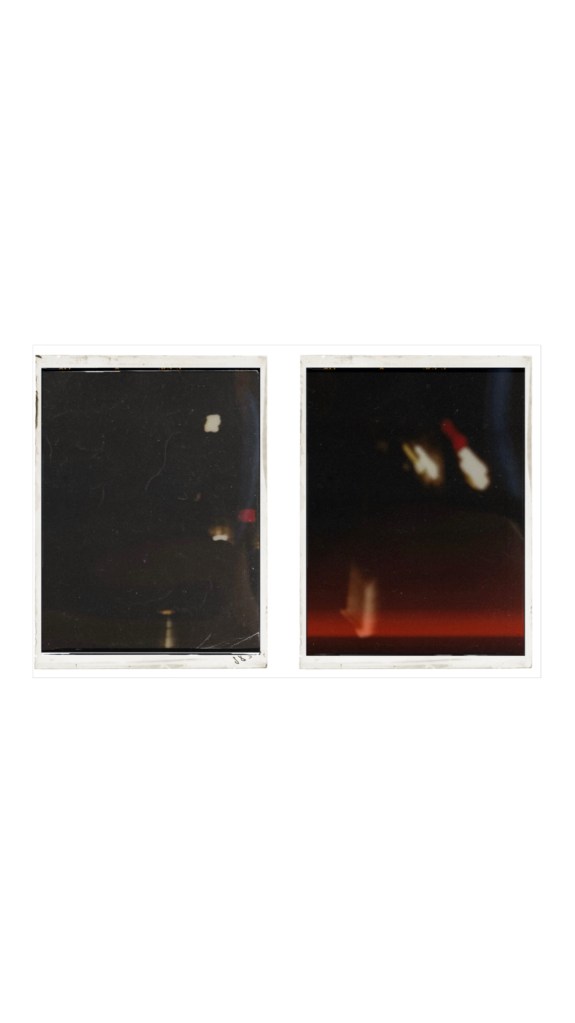
 Brandon Gehres
Leave a comment