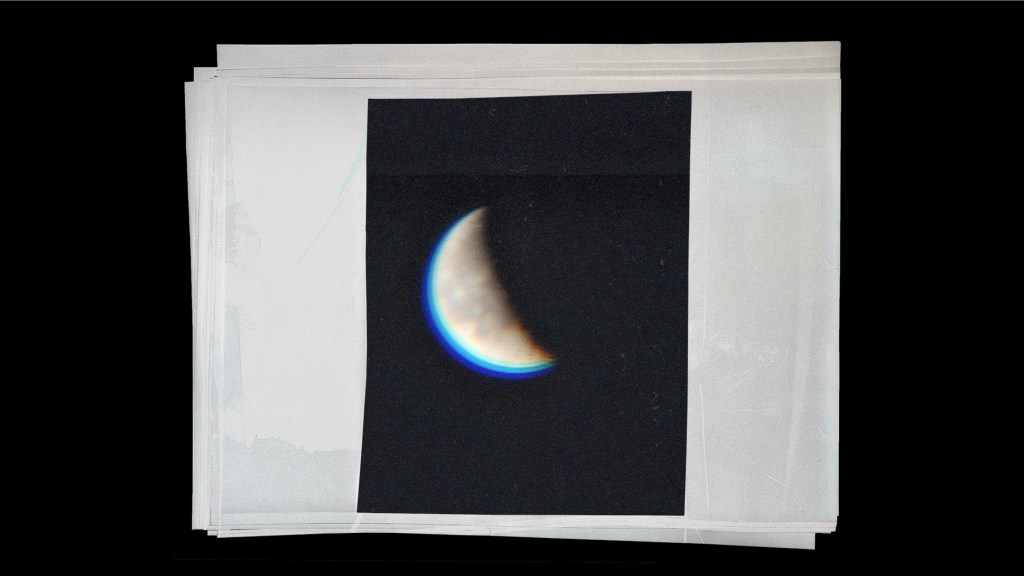
• I wake up and my first thought is not gratitude, not even complaint, but a tired arithmetic: Not another sunrise. As if the sun were a bill I forgot to pay yesterday and now it has arrived again. Morning light spills across the wall like a reminder I didn’t ask for. I lie there listening to the loft make its small noises—pipes, wind, the internal wind rehearsing—and I am already exhausted by the prospect of another day that will ask me to be interested. Another day that will require me to pretend curiosity is renewable.

    Evenings frighten me more. Not because they are dark, but because they are quiet. Bedtime arrives like a blank page that refuses to become anything else. Dreams, when they come, are dull reruns: conversations I’ve already survived, rooms I’ve already left. I used to think boredom was a luxury, that is, proof that nothing was wrong. Now it feels like today’s greatest monster. We no longer tell stories about dragons or giants because we have engineered them out of the wild. The beast that remains is this flatness, this long corridor of hours where nothing lunges at you, nothing surprises you, nothing even hurts in an interesting way.

    I am bored in a way that feels deep, the kind that hollows out enthusiasm and leaves the shell intact. I pick up the books I once loved and they weigh too much in my hands. Music plays and it is only sound, not a transport. Ideas arrive and immediately apologize for themselves. I remember when interest felt involuntary, like breathing. Now I have to schedule it, coax it, threaten it. I am embarrassed by how much effort it takes just to care.

    And I am a teacher. This is the quiet shame I don’t often say aloud. If the teacher is bored, what happens to the room? How do you invite others into growth when you feel static, when your own imagination has called in sick? I stand in front of people and ask them to push themselves toward insight, toward difficulty, toward beauty, while privately wondering where my own hunger went. I can describe the terrain of curiosity from memory, like someone explaining a city they moved away from years ago. I.e., Modesto, California. The directions are accurate, but I no longer live there.

    Boredom has teeth because it eats meaning without leaving a mess. It does not roar, but hums. It convinces you that your attachments were flimsy to begin with. I look at the things I once clung to, such as people, ideals, projects, and feel the loosening. There is a terror in that, but also a strange clarity. We are all more devoted than we admit. We all kneel somewhere. The danger is not devotion itself but the carelessness with which we choose it.

    I used to believe love alone could be an altar. I thought one person could hold the weight of my seriousness, my willingness to endure. Now I see how reckless that was. People are not stable structures. They change, leave, hesitate, get sick, lie, grow tired, betray you, or put their love and attention somewhere else. To build your entire faith around a single human being is to misunderstand them and time. It is to ask something finite to behave like it is eternal. That kind of attachment feels romantic until it collapses, and then it feels like madness disguised as loyalty.

    We all attach ourselves fiercely. To lovers, to nations, to ideas, to classrooms, to versions of ourselves that no longer exist. The question is not whether we will become fanatical, but where. What will outlast us? What can absorb our seriousness without breaking? A cause can survive our moods. A practice can carry us when enthusiasm evaporates. A commitment to learning, the kind that admits boredom as part of the curriculum and that might be sturdier than passion alone. I am trying to learn how to teach from this place, not by pretending boredom isn’t here, but by naming it as part of the work. Growth does not always feel like fire. Sometimes it feels like staying in the room when nothing sparkles. Sometimes it feels like choosing to care before you feel cared-for by the world. I tell myself that presence can precede excitement, that curiosity can be rebuilt from discipline, that showing up is not hypocrisy even when joy is absent.

    Still, some mornings the sun feels like an accusation. Some nights the bed feels like a waiting room where nothing happens. I am frightened by how easily days can blur into one long, colorless sentence. But I am also beginning to understand that boredom is not proof of emptiness; rather, it is proof of survival in a world that no longer tries to kill us with monsters. The task now is subtler and harder: to choose what deserves our attention, to build attachments that can endure change, to teach not from endless enthusiasm but from honest persistence.

    I wake up. The sun is there again, and I do not love it. I acknowledge it. I get out of bed anyway. I gather my seriousness carefully, like something fragile but necessary, and decide where to place it.
  • In math class, the chalk dust settles like flour on a counter. The teacher writes a new equation, and I copy it down the way I once copied instructions from the back of a box: preheat, combine, wait. There is comfort in the certainty of steps, but also a dull resentment. I am not discovering anything. I am reenacting a decision someone smarter, earlier, more patient already made. The proof is not mine. The genius is absent, leaving only directions.

    Hands sticky with sugar, eyes scanning for what came next. I baked this way, trusting that if I followed the steps faithfully, something delicious would emerge. And it usually did. But the pleasure was borrowed. The recipe had already survived its failures. I was only the final witness. Math feels like that: I stir symbols that were stabilized long ago, hoping the result rises because it has risen for everyone else.

    This makes frustration bloom. I want credit for effort, not just accuracy. I want the warmth of invention, not the lukewarm assurance of correctness. It seems unfair that the hardest part, that is, the thinking, has already been done, and all that remains is obedience.

    Yet there is another truth hovering beneath the surface. Minds that race ahead sometimes trip on their own speed. The more intricate the thinking, the more habits knot themselves into deep dependency. Meanwhile, simpler patterns, repeated steadily, can loosen a grip more easily than brilliance ever could. The smarter I grow, the more difficult it is to break an addiction that revolves around achievement, and I partly want to be young again because I’d be naive enough to not need the pleasure of becoming somehow advanced myself. Complexity does not always mean freedom.

    And boredom changes its texture when I stop resisting it. Loneliness isn’t the function of solitude. If I lean all the way into the repetition, if I attend closely to each dull step, the dullness thins. The equation begins to whirr. The recipe starts to smell like something alive. Concentration becomes a kind of rebellion. I may not be the original mind behind these instructions, but in giving them my full attention, I claim a quieter authorship: the patience to stay, to finish, to learn why the steps work at all.

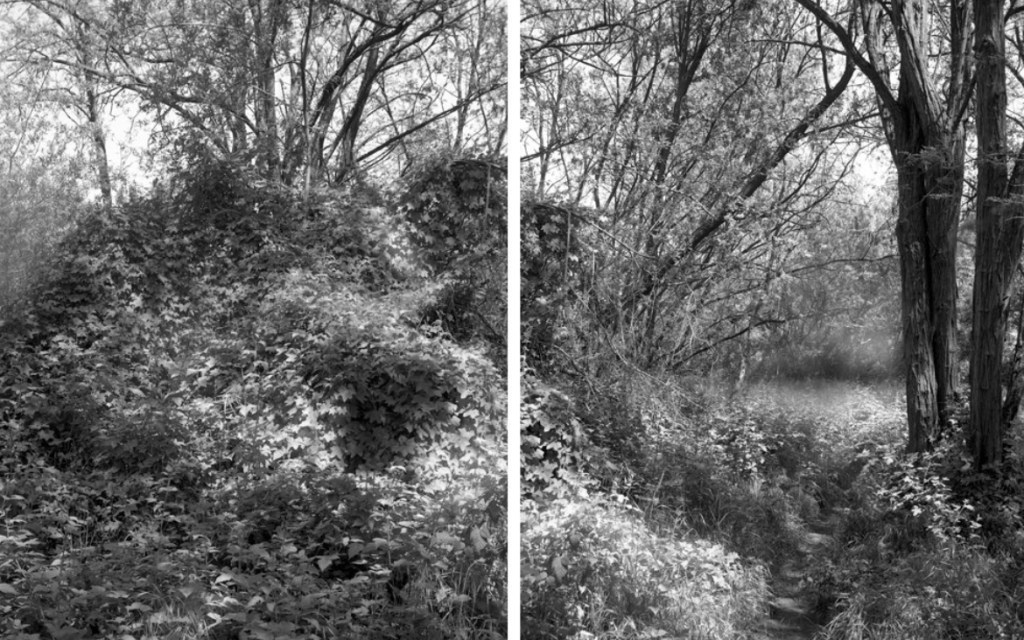
  • The garden does not ask what time of year it is. It knows. It knows by the angle of light, by the temperature held in the soil, by the way moisture lingers or vanishes. It responds without debate. Leaves fall because it is time to let go. Roots thicken because they must hold through cold. Seeds wait because waiting is also a form of work. There is no panic in this intelligence, no urgency to explain itself. The garden practices trust by continuing. The gardener—me—arrives each day as a witness more than a director. Hands in pockets, breath in measures, I remind myself aloud that tending is not control. The garden does not need reassurance, but the gardener does. Saying this is enough becomes a ritual: enough water, enough patience, enough care for today. The gardener learns that showing up counts even when nothing seems to change. Especially then. Affirmation grows quietly, like mycelium beneath the surface, connecting effort to meaning long before anything breaks ground.

    This garden is starting to confuse me. I am trying to understand my hurt the way one tries to understand a language they once spoke fluently and now can only recognize by accent. I know the sounds of it. I know the cadence. But the meaning slips. It is strange to feel pain and not immediately know where it belongs, especially when someone else is busy cataloging joy. She remembers warmth, remembers laughter, remembers the easy coherence of old conversations, the way words once leaned toward each other without effort. Meanwhile, I am standing in a quieter room, holding an ache I cannot translate, unsure if it is grief or shock or the dull exhaustion of loving something that has already been renamed. What confuses me most is the request itself: she wants me to declare that the future is impossible, that there is no door left to open, when it was her hand that closed it. There is something disorienting about being asked to supply finality for a decision you did not make, like being asked to sign your name at the bottom of someone else’s goodbye. I feel trapped between honesty and kindness, between the desire to protect myself and the impulse to keep her from ambiguity. I don’t yet know which impulse is wiser. I only know that my body feels tight, like it has been instructed to brace for an impact that already happened. So I am trying to learn how to sit still inside this confusion without demanding that it resolve itself. There are moments when the only honest posture is stillness, when the bravest thing is to remain in one place and allow the discomfort to exist without explanation. Hurt does not always arrive with a lesson attached. Sometimes it just wants a chair, wants to be acknowledged without being interrogated. I am learning that this kind of waiting, this quiet endurance, changes your priorities. You become less invested in how you appear to others once you realize how little time they actually spend thinking about you. Hurt has a way of shrinking the audience until there is only you and the truth of your breathing. It is as if the truth will set me free, but not until it’s done with me. Time to build a routine that does not revolve around a certain memory, even as her memory keeps knocking. I wake up and make coffee. I write things down instead of sending them. I ask myself questions that do not require quick answers. I practice speaking clearly, even when no one is listening, because clarity is a muscle that atrophies without use. I used to hang out in this garden. It’s hard to not place all my emotional weight on a single connection, how to distribute care across friendships, work, solitude, and the small rituals that anchor me back into my body. And does not mean withdrawing; rather, it means learning how to lean without collapsing. It’s as if someone is suggesting to me to try yoga, but I am that person. I still believe in kindness that does not bargain or keep score. I have seen moments of generosity that ask for nothing in return, gestures that exist simply because they can, like what marigolds do. Knowing this keeps me from becoming bitter. It reminds me that not every exchange needs a future to be meaningful. Some things are good even if they do not continue. Some people are kind without needing to be permanent. This belief feels fragile right now, but it is intact. There are nights when anxiety floods my chest and makes every thought feel loud and urgent, and yet I have learned that even then, the body can choose rest. I have surprised myself by drifting into sleep mid-spiral, as if some deeper system understands that vigilance is not the same as survival. Concentration, I am discovering, is work. Paying attention—to my breath, to my routines, to what is actually happening instead of what might—requires effort. It is work I often want to avoid. But avoidance has taught me nothing. Attention, even when painful, teaches me something every time. This moment is shaping me whether I consent to it or not. There is no neutral ground. I can let it fracture me, or I can allow it to mold me, slowly, imperfectly, through repetition and humility. Learning is not glamorous; it is often uncomfortable. It requires staying present when every instinct wants to flee. It requires listening to people who stumble, including myself, and treating failure as instruction rather than evidence of inadequacy. Growth is less about talent and more about what I am willing to look at without turning away. I don’t yet know what I will say, and I don’t yet know how to name my hurt cleanly. But I am understanding how to stay with it. I am learning how to pay attention without running. And for now, that feels like enough: to remain intact inside uncertainty, to let confusion be part of the curriculum, to trust that understanding will arrive not all at once, but gradually, as I continue to show up to my own life.

    Life announces itself everywhere if you are willing to look closely. In the worm turning soil without recognition. In the stem that leans toward light without ambition. In the rot that feeds what will come next. Even decay participates. Nothing is wasted; it is only reassigned. The garden holds grief and renewal in the same breath, does not separate loss from continuation. Frost does not mean absence. Dormancy does not mean failure. When spring returns, it is not a miracle but a memory kept. The garden remembers itself through the dark. And the gardener (me), watching this, learns to trust their own seasons too. To believe that care given quietly, repeatedly, will eventually surface, alive and unmistakable, exactly when it is ready.

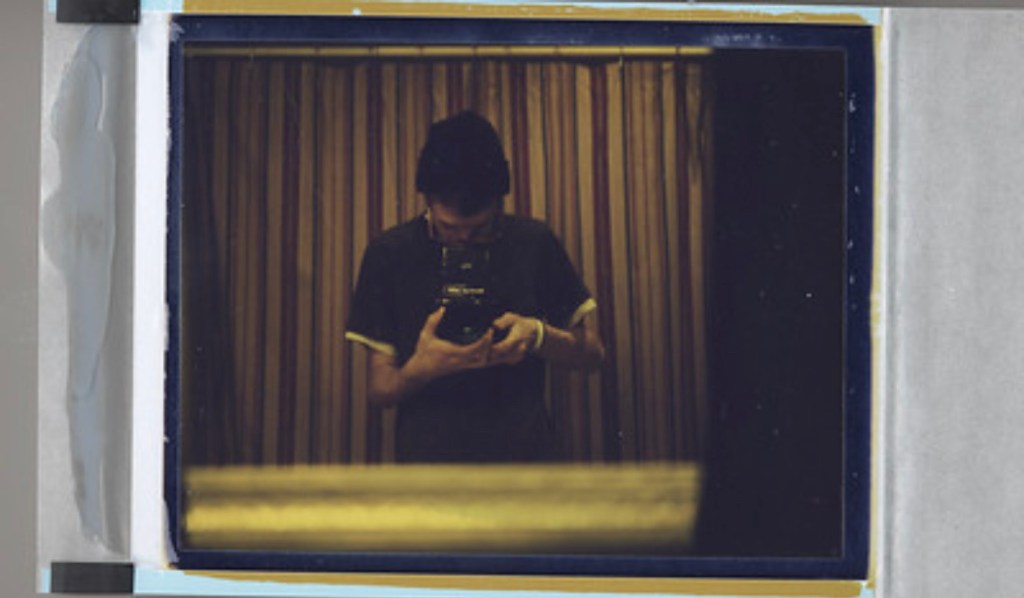
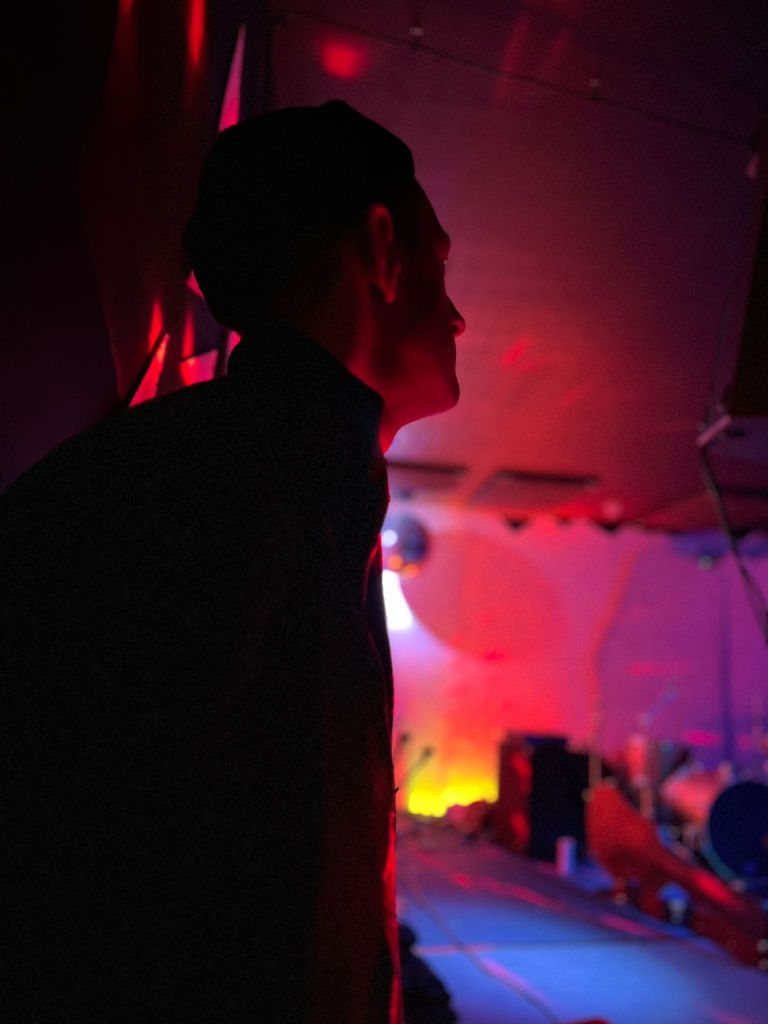
  • I remember the exact moment I decided I was difficult to love. It was quiet and undignified. No witness but the mirror. I stood there and lifted my camera like a small, trembling verdict and took a picture of myself, as if evidence were required. At the time, my body was a negotiation I was losing. Hunger felt holy. Disappearing felt efficient. I did not want to die so much as I wanted the effort of living to stop asking things of me. There is a difference, but it is thin enough to cut yourself on.

    I learned then that sometimes human beings have to sit in one place and hurt. Not dramatize it. Not redeem it. Just sit. Like an animal who knows running will only make the wound worse. Pain does not always ask to be solved. Sometimes it asks to be survived minute by minute, breath by breath, with no larger story attached. You will become far less concerned with what other people think of you once you realize how rarely they do. Their attention is brief, distracted, tender in flashes. Your suffering is mostly private. This is not cruelty, but it is physics. Everyone is carrying something heavy, and no one has a spare hand. But there is such a thing as raw, unalloyed, agendaless kindness. It does not try to fix you. It does not extract a lesson. It sits beside you like a cup of water placed within reach. I learned it is possible to fall asleep during an anxiety attack, the body finally insisting on rest the way a parent insists a child stop crying by holding them anyway. Concentrating on anything is very hard work. Attention is not a given; it is a muscle that trembles under load.

    You can be shaped, or you can be broken. There is not much in between. I try to learn and be coachable. Learn from everybody, especially those who fail loudly and honestly. This is one of the most difficult things anyone can do.

    Being a Student of the Game is learning how promising you are as a function of what you can pay attention to without running away. When I took that picture, something in me chose not to flee. A large part of myself went underground instead, becoming a sleeping giant beneath the earth. Alive, waiting, conserving strength—but I hope it’s not like tuberculosis. Not gone. Not ruined. Just resting, until the day attention becomes courage, and courage becomes motion.

  • By noon the tree had accepted me the way a dare accepts a child, that is, without conversation and without mercy. I climbed because I always climbed. Because my body knew how to pull itself upward, knew bark and branch the way a words know how to keep going once they have started. I trusted my arms, my calves, the clean logic of ascent. Each limb was a solved problem. Each foothold was a yes. The afternoon widened beneath me, slow and golden, and I felt briefly chosen by height, singled out as someone who could go where others stayed small.

    It was when I stopped that the world changed. I looked down, and the ground had withdrawn its face. The houses had folded themselves into shapes I could not name. My neighborhood—so memorized, so knowable—lost its grammar. From up here, everything was reduced to distance. I realized I had climbed past recognition. I could no longer locate the version of myself who had begun this, the one who believed coming down would be as easy as going up.

    The tree did not offer instructions. It only held me. Hours stretched in that holding. My muscles began to tremble, not from effort but from uncertainty. Every branch below me looked thinner than I remembered, less loyal. Gravity felt newly personal, like a judgment I had postponed too long. I understood, with a clarity that hurt, that bravery without foresight is just another way of being careless. I waited for someone to notice, but the day kept going without me. Shadows shifted. The sky was indifferent. I was alone with my height, with the mistake of believing that reaching upward was proof of beauty, proof of worth. I had confused elevation with arrival. I had mistaken risk for vision. This is what embarrassment must feel like.

    Fear is not loud in moments like this. It is precise. It measures distance. It calculates pain. I imagined the fall in small stages: scraped skin, a snapped bone, the humiliation of being carried back into scale. I imagined the cost of descent and felt ashamed that it might be the only honest option left.

    What trapped me was not the tree. No—it was the knowledge of my own limits arriving too late. I had climbed into a self I did not know how to leave. The child who had felt capable now felt exposed, suspended between what he could do and what he had not thought through.

    Eventually, afternoon leaned toward evening, and I chose my way down the way one chooses a confession: slowly, bruising honesty included. Each movement was smaller than the climb, more deliberate. When my feet touched the ground, nothing cheered. The houses returned to their usual forms. My body hurt. But I recognized myself again: not heroic, not beautiful, just human—someone who learned, stuck there for hours, that going up is easy, but knowing how to return is the harder art.

  • I grew up in a house that faced the beach, close enough that the ocean felt like another room of the house, a loud, breathing presence. Out the door we would run, my parents and I, smiling and unprepared, as if the shore were an emergency we had to answer immediately. The air always arrived first: salt-sharp, clean enough to sting. The sand gave way beneath my feet, each step a small collapse, my body learning early that nothing solid stays solid for long. Waves crashed with a confidence that made me feel both greeted and erased. On windy days, the air shoved at my ears so hard I couldn’t hear myself think, as if thought itself were something light enough to be blown away.

    The beach taught me how noise can feel like joy. It was everywhere, unavoidable, democratic. No one could own the sound of the ocean. It entered your body whether you wanted it or not. Sometimes I believed that was love.

    Or maybe I did. The ability to hear others was not with me, and everything sounded as if it was all happening beneath the tide. The world began to dull, to thicken. Voices reached me as if they had traveled a long way through water, warped and softened, stripped of their edges. I watched mouths move and guessed at meaning. I nodded too much. I smiled when I shouldn’t have. Everything sounded underwater—my parents calling my name, my own breath, the ocean I had trusted to be loud and clear. I couldn’t listen the way others listened, and so I stopped trying to speak. Words felt useless if they couldn’t arrive whole.

    Silence can be violent. That you can drown without water. That even a child raised by the sea can forget how to surface, how to ask to be heard, how to believe that someone will listen.

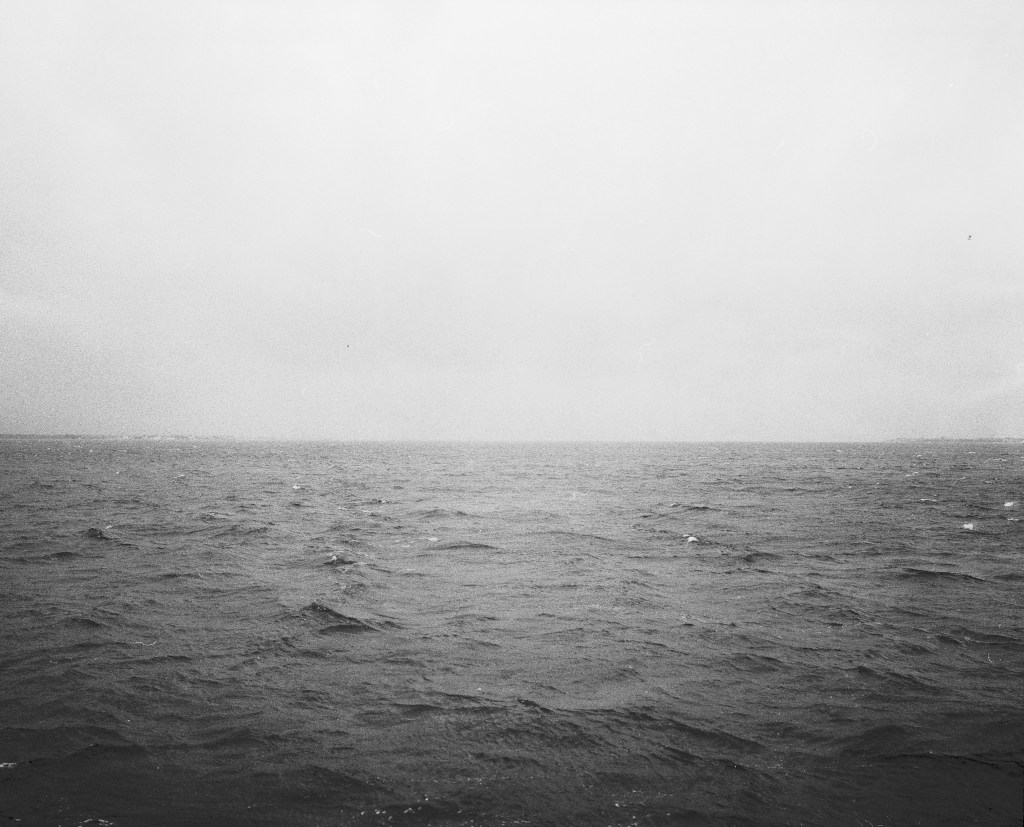
    Half of a lifetime later, I managed to see the ocean on the other side of this continent, and so far it looks the same. I saw her at the shore on a day when the weather refused to be kind. The sky was gray in every direction, not dramatic, just endless, as if color itself had given up. The wind was violent, the kind that doesn’t move around you but through you, rearranging your thoughts. Her hair went everywhere at once, an argument with gravity, a refusal to stay neat. She stood there steady anyway, feet planted in sand that kept trying to leave her, mouthing words into the storm.

    Without question I remember thinking that she was the most beautiful woman I had ever seen. Not because the scene was romantic. It wasn’t. It was harsh and loud and unphotographable. But beauty, I learned then, doesn’t require cooperation from the weather. I couldn’t hear what she was saying. The ocean crashed too hard, the wind tore the sound apart before it reached me. Her words arrived only as shapes, as intention. Still, I was utterly confident—strangely, peacefully confident—that what she was saying came from love. Not the careful kind, not the rehearsed kind, but the kind that insists on being spoken even when it knows it might not be understood.

    I watched her speak anyway. Watched her trust the distance between us. Watched her believe that meaning could survive noise.

    Now she exists only as memory: gray sky, wild hair, the ocean interrupting everything. I replay the moment obsessively, trying to lip-read the past. I want so desperately to know what she was trying to say. I want to recover the sentence the sea stole from me. Maybe it was something simple. Maybe it was everything. Maybe it was the kind of truth that only gets said once, when the wind is loud enough to take the blame.

    What haunts me is that I couldn’t hear her. She was saying something, and I am still listening.

  • We sat at a table that had learned how to hold us. It was wide enough for plates and elbows and the careful spill of a morning that had no intention of rushing. Brunch arrived: coffee steaming, two breakfast burritos sliced, butter melting as if it understood time better than we did. The conversation moved the way water does when it is glad to be water. Lively, but also listening. Insight folded into humor. A thought offered, and another returned brighter. We laughed—not to fill silence, but because the conversation asked for it. Everything felt copacetic, a word that suddenly made sense in the body, not just in my head.

    The light leaned in. It filtered through dusty glass: dust and the modest ambition of the hour, casting warm colors that seemed borrowed from late afternoons and forgiven summers. Gold pooled at the edges of plates. Blue touched her hands. Even the shadows were kind. I then noticed the few gray hairs threading her head like annotations in a beloved book—evidence of time spent thinking, loving, enduring. They gave me a strange sense of victory, not over her, but over fear: I had not yet found one on my own head. Time had reached us unevenly, and for once, that felt like a gift. I realized how calm I was. How my shoulders had dropped without being asked. How my breath had slowed to match the pace of her words. There was no armor on me, no performance. Just this: the astonishing fact that this is the person I will be with until who knows when—hopefully until I die. The thought did not frighten me. It steadied me. It felt like standing on ground that recognizes her weight.

    I tried to remember the last time I was this happy and failed. The memory would not surface. Instead, there was only this electric quiet, this thrilled and gently nervous joy, this table holding us while we learned how good it can be to stay.

    Some time has gone by before I return to the same table as if it might remember me, as if the grain of the wood could recognize the weight of my absence and make room for it. The chair feels too honest. Without her, the surface offers nothing to lean into. I sit, then unravel. My hands clasp themselves the way strangers do in waiting rooms—too tight, too deliberate—and my knuckles blanched as if I could anchor myself there. I cannot recognize the me that was there then, and I wish I could tell myself then that I should be savoring the happiness in the moment, not replaying the great happiness later.

    The window is still dirty. I cannot stop noticing it now. A smear catches the light and fractures the morning into something I don’t trust. I wish someone would clean it, though I know what I’m really asking for is clarity, or mercy, or a reason this hurts more than it should. My eyes fill. Tears arrive quietly, practicing restraint. They fall without witnesses. Everyone else is busy being themselves—laughing, scrolling, entertaining.

    Maybe what I am left to find is relief in this invisibility. Life is easier once you accept that no one is paying attention to you, that your fracturing does not interrupt the room. But I am still nervous. Still afraid. “Everything I let go of has claw marks.”

    A crisis does not manifest all at once; it accumulates. It is built from the moments I did not love well, from the sentences I never learned how to say aloud. It grows quietly while I am distracted, convinced that if I watch enough, read enough, stay busy enough, something will click into place. I fill my hours with stories that resolve themselves, hoping they will tutor me into completion. But the screen goes dark, the book closes, and I am still here, measuring my life against an unfinished ledger. Entertainment dulls the edges, but it cannot teach me how to begin.

  • I lie in the bathtub long after the steam has gone, after the water has learned the language of the room and gone flat and honest. The faucet has stopped speaking. The light hums. The water cools without notice, and I do not flinch. I tell myself I am resting, that this is recovery, that stillness has earned its own vocabulary. My knees rise like small islands. Soap thins into grayish halos, dragging today’s dirt into slow constellations. I watch them drift and feel an affection I do not trust.

    Cold creeps in politely at first, touching my ankles, my wrists, the nape of my neck, asking permission I never give. I am too busy rehearsing the effort it would take to leave. Standing feels like a choice with consequences. The air beyond the porcelain edge waits, round and articulate, full of tasks and gravity. In here, the water holds me in a shallow embrace, asks nothing, accepts everything. It is easy to be forgiven by something that has no memory. I become accustomed to the chill the way one becomes accustomed to a disappointing truth. It stops talking about itself. My skin learns to blur its own signals. I think about how comfort can be a form of quiet harm, how the body can negotiate with neglect if it’s offered slowly enough. The bathwater grows tired of being clean. It carries my shed hours, my loosened thoughts, my small refusals to move on. I float among them like evidence.

    I don’t like how well I belong here. How the cold doesn’t chase me out, how the dirt doesn’t disgust me, how the stillness doesn’t ask me to improve. I know that staying is a kind of practice. I know that leaving would feel like betrayal—to the water, to myself, to the fragile calm I’ve built from not choosing. Eventually, my fingers wrinkle into maps of time passing, and even then I hesitate. I am learning how easy it is to endure what is wrong when it asks so little.

  • As a child, I loved the way herbs and flowers grew with no regard for the smallness of my hands. I pressed seeds into soil the way other children pressed coins into wishing wells, believing that patience itself was a form of devotion. The garden was never large, but it felt great to me—rows of basil and thyme breathing out their quiet assurances, mint threatening to take over if left unattended, chamomile bowing its small heads in agreement with the sun. And there, always there, were the marigolds. They were impossible to ignore. They burned in the dirt like small suns, like a declaration that brightness could be practical, that beauty could also be useful.

    I prized the marigold above all others. Not because it was delicate—it wasn’t—but because it knew its role and performed it generously. The marigold did not ask permission to protect the rest of the bed. It repelled what would harm, drew in what would help, and stood as a boundary without becoming a wall. Its scent was sharp, almost medicinal, as if to say love does not always smell sweet. Sometimes it smells like assertion. Sometimes it smells like warning. I wanted to grow up and be a marigold. I wanted to take on its discipline and its warmth, its ability to stand close to others without overshadowing them.

    I imagined myself as a teacher like a marigold—present, steady, planted at the edge of uncertainty. I wanted to believe that simply by being there, by showing up every day in the same place with the same commitment, I could make learning safer for those around me. I wanted my presence to deter fear, to keep pests of doubt and cruelty at bay. A marigold does not shout instructions. It teaches by example, by persistence, by refusing to wilt at the first sign of heat. And I wanted to be a family member like a marigold, rooted and reliable. I wanted to contribute without needing praise, to nourish the shared soil rather than compete for light. Marigolds do not hoard resources; they make space for others to thrive, and they understand that belonging is not about dominance but about balance, about knowing when to stand tall and when to let another stem catch the sun.

    Most of all, I wanted to be a lover like a marigold. I wanted to be protective without being possessive, vivid without being overwhelming. I wanted to offer warmth that did not scorch, attention that did not suffocate. Marigolds love outwardly. They love in a way that benefits more than just the one they are closest to. Their affection radiates, and the whole bed is healthier for it.

    It hurts me to think that I have never been a marigold. That I have sometimes failed to protect, failed to nourish, failed to stay when staying mattered most. I think of the people I have hurt—through absence, through sharpness, through my inability to root myself fully in care—and I want to apologize. I am sorry I did not know how to be useful in the ways that matter quietly. I am sorry I mistook brightness for enough.

    And still, I set my eyes on it. I am now a man who kneels in the dirt of who I am and press the seed in again. I tell myself that marigolds are not born complete; they grow into their purpose. They learn the shape of the sun by reaching. If I cannot be a marigold now, I can practice becoming one—learning how to stand close, how to protect without harm, how to love in a way that leaves the ground better than I found it.

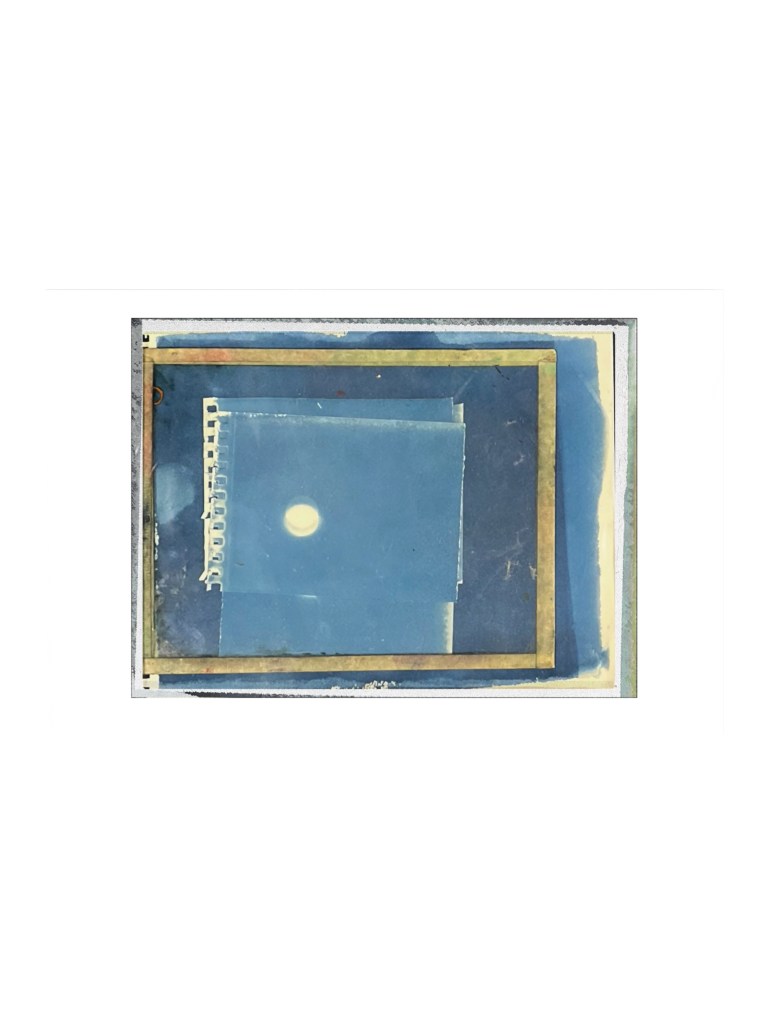
  • I have made so many photographs in my life that the number loses its edges. Tens of thousands, maybe more, each one a small decision to notice, to frame, to say this mattered enough to stop time for it. If I gather the hours I spent in the darkroom—standing, waiting, breathing the chemical tang of fixer and developer, hands stained into permanence—they would accumulate into months. Entire seasons lived under safelight. Months of my life spent coaxing what was invisible into an image, persuading light to confess what it had touched.

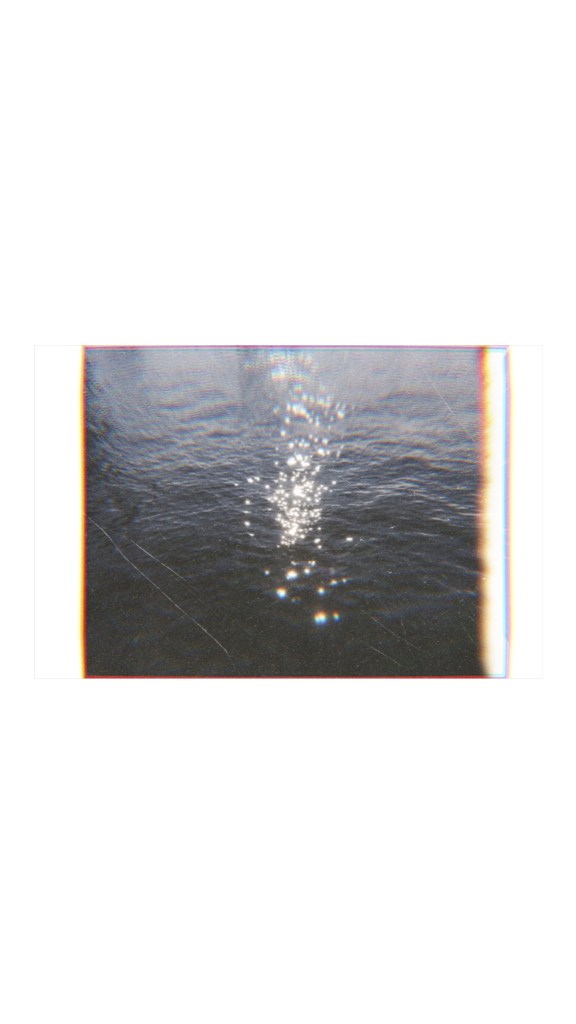
    In the darkroom, the delicate becomes formidable. The sun, which burns and vanishes so quickly in the open world, learns to stay. Light that once slipped through asked to hold still, to endure darkness long enough to be seen. I mixed solutions like a kind of prayer—measure, pour, stir, wait—knowing that precision mattered but so did patience. Too long and the image would drown into a fog. Too short and it would remain a ghost. I learned that photographs are not taken; they are negotiated.

    I watched images appear the way language does when you finally find the right word. Slowly, reluctantly, as if unsure they wanted to exist. A pale suggestion first, then it materializes. I learned to trust that what I could not yet see was still there, suspended in silver halides, waiting for the right conditions to reveal itself. Faith—not from doctrine, but from trays of liquid in the dark.

    I spent hours bent over microscopes, studying the grain of silver, those constellations of chance that hold an image together. Focusing and unfocusing, discovering that sharpness is not the same as clarity. The grain taught me humility. No matter how carefully I exposed the frame, there was always randomness, always something beyond control. The image was never only mine. It was the result of light, chemistry, time, and my own imperfect hands. Creation was collaboration.

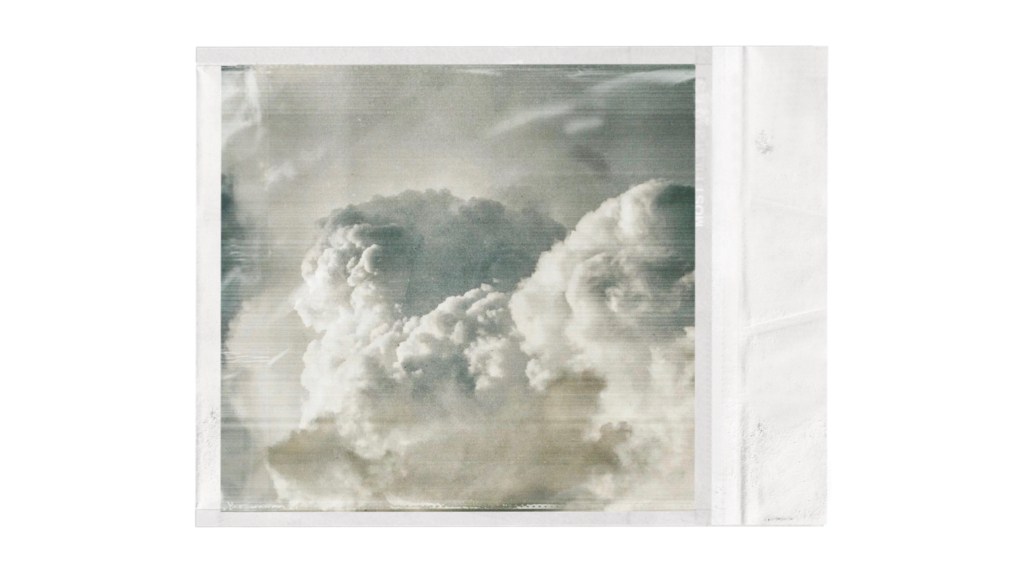
    After all of this—after enlargers and meters and lenses heavy as declarations—I stepped into a camera obscura. I did not know yet what I was seeing, only that the world had entered a room and laid itself gently across the walls. The ocean was toward the ceiling. People floated upside down. Clouds drifted, silent and astonished, across plaster. The image moved without my permission. It breathed. It did not need to be captured to be real. The world wants to be seen, and I stepped into a camera.

    I stood there, inside that quiet miracle, watching light translate itself without effort. No shutter, no film, no chemicals. Just a small opening and patience—stay long enough for my eyes to adjust. The image was fragile, temporary, already disappearing as soon as I noticed it, and yet it felt complete. Whole. I remember thinking that seeing could be an act of receiving rather than taking. Still, I chased mastery. I carried gear that weighed as much as certainty. Cameras that promised precision, lenses that bent the world obediently. I believed that if I owned the right equipment, I would finally deserve the images I loved. I measured myself in stops and focal lengths, in sharpness charts and brand names. I confused complexity with depth, control with devotion.

    But every photograph I loved most came from something quieter. A moment when I forgot the camera and remembered my own attention. A frame guided not by settings but by longing. What I was really trying to preserve was not light, but feeling—the ache of noticing, the tenderness of attention. The equipment was never the source. It was only a conduit.

    Now I understand that the darkroom was teaching me something else all along. That what develops in darkness comes from what you carry into it. That love is the most reactive element. That the image appears when you are willing to wait with it, to trust that something meaningful is forming even when you cannot yet see it.

    I never needed all that gear. I needed my eyes, yes—but more than that, I needed my willingness to care. The photographs were never inside the camera. They came out of me, out of my attention, my patience, my desire to witness. Light only agreed because it recognized itself there.

    I am still making images. Even now, without trays or timers or microscopes, I am developing them—no from a camera, exactly, but from inside myself, slowly and lovingly—letting what I love become visible in the dark.