The building across the street has a row of windows that catch the late afternoon light in a way that feels almost purposeful, as if someone had arranged the angle of the glass to hold the sun a moment longer than necessary, and I find myself watching it while my phone rests face-up on the table, its dark screen reflecting nothing back to me, and I realize that I have given both objects the same quiet attention, the window and the phone, as though each might offer a kind of confirmation that the day is still proceeding as it should.
In the room where I sometimes talk things through, there is a clock that does not state itself but remains present enough to measure out the conversation in discreet segments, and I remember trying to explain, with some care, that what I have been feeling does not arrive with the clarity of a named emotion, that it resists the usual categories, and so I called it, somewhat awkwardly but with a certain accuracy, the Big Sad, which is less a feeling than a condition, something ambient and difficult to isolate, like a change in air pressure that you notice only because everything else seems slightly off. I look back at the clock and find it that it doesn’t have hands.
I said, or tried to say, that it is not a matter of wanting to end my life, which would at least suggest a decisive impulse, but rather a quieter and more persistent thought, that I do not want life to continue asking things from me at the same pace and with the same expectations, that I would prefer, if such a preference could be honored, a kind of temporary suspension, a pause in which the demands of being a person might be reduced to something more manageable, and even as I spoke I was aware of how carefully the language needed to be arranged, how easily such thoughts can be misunderstood if they are given too much or too little emphasis.
Outside, the flowers have begun to open in a way that feels both gradual and sudden, as though they have been preparing for this moment for longer than anyone has been watching, and when I pass them on my way to a place where I intend to sit with a drink and a book, I notice their color with a precision that almost compensates for something else. The deep saturation of petals, the slight variations within what appears at first to be a single shade, and I think that attention can sometimes function as a form of steadiness, a way of keeping oneself aligned with the visible world.
The place I choose is not particularly remarkable, which is part of its usefulness, a room where people come and go without a performance, where the presence of a solitary person does not require explanation, and I take a seat with the familiar arrangement, the glass placed within easy reach, the book opened to a page that I will read only in a come-and-go or in a somewhat bulimic way, and the phone positioned so that any change, will be immediately apparent, and it occurs to me that this is a kind of structure, a way of organizing time around the possibility of interruption.
There are conversations unfolding around me that do not draw attention to themselves, and yet they are unmistakable in their ease, the small adjustments of posture, the brief overlaps of speech that signal familiarity rather than confusion, and I find myself observing these interactions with a level of detail that borders on study, not out of curiosity exactly but out of a desire to understand the mechanics of something that seems both ordinary and inaccessible, and I think that perhaps loneliness is not the absence of people but the absence of participation in these small, continuous exchanges.
I check the phone without urgency, as though I am verifying a condition rather than expecting a change, and the screen remains unchanged, which is not surprising but still requires a moment of adjustment, a recalibration of the next few minutes, and I return to the book, tracing a sentence that I do not fully absorb, because my attention has already begun to move elsewhere, following a line of thought that feels loosely connected but not entirely random.
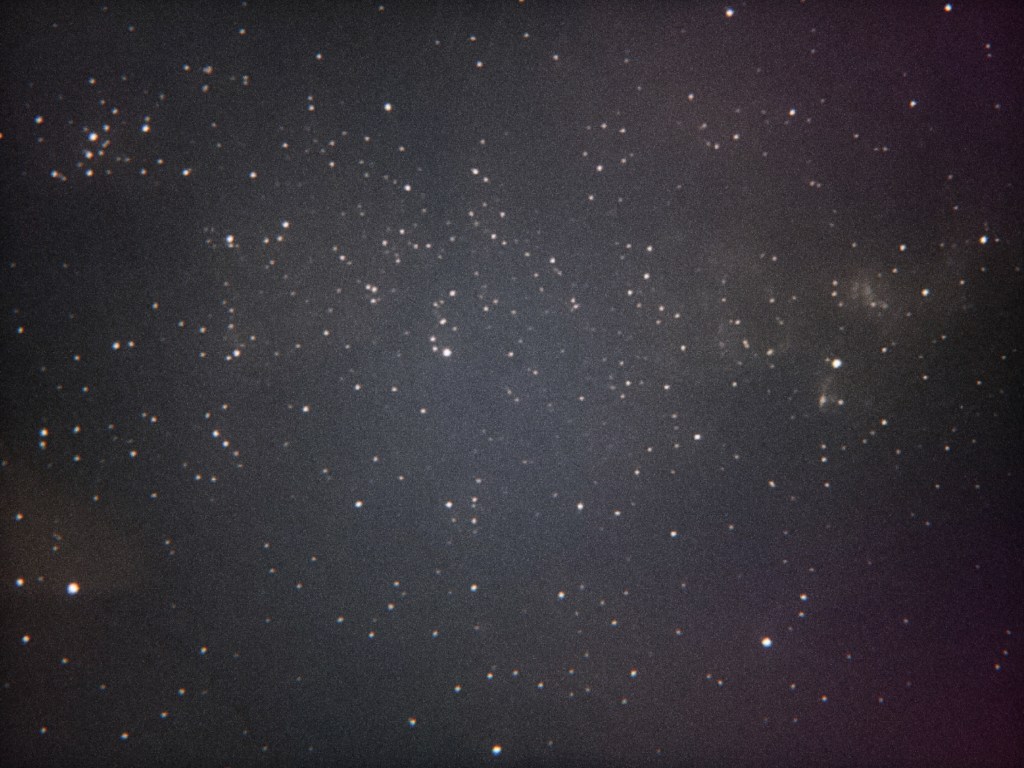
It brings me, as these things often do, to the idea of distance, not the immediate kind measured in steps or blocks, but the kind that is described in terms of light and time, and I recall reading that the stars we see at night are not presenting themselves as they are but as they were, their light traveling across such vast intervals that it arrives as a kind of delayed message, and I consider how this might serve as a comparison, not because the scale is the same but because the structure is similar, the sense of perceiving something that may no longer be active in the way it once was.
There is a particular person I find myself thinking about, not with any dramatic urgency but with a steady and recurring attention, and I realize that much of my waiting is oriented toward this one point, this imagined signal that would alter the configuration of the evening, and yet the longer the waiting continues, the more it begins to resemble those distant lights, something that is visible in memory and expectation but not necessarily present in the current moment, and I am left to consider whether what I am responding to is an ongoing connection or the afterimage of one.
The birds outside are audible even through the glass, their sounds forming a pattern that is both intricate and unselfconscious, and I find that I am listening to them in the same way I look at the flowers, with a kind of deliberate attention that does not require anything in return, and there is a quiet relief in this, in the recognition that not all forms of engagement depend on reciprocity, though this recognition does not fully resolve the other kind of absence I am aware of.
When I try to describe the Big Sad, I return to the idea that it is not located in any single thought or event, but rather in the accumulation of small intervals like this one, the spaces between expected messages, the moments in which I am present but not addressed, and I think that this is why it resists clear definition, because it is composed of so many minor elements that do not individually justify the name but collectively produce its effect.
The session ends, as it always does, within the measured boundaries of the hour, and I step back into the ongoing sequence of the day with the sense that something has been articulated but not entirely resolved, which may be the most that can be expected, and as I walk again past the building with the reflective windows, now dimmer in the evening light, I notice that the surface no longer holds the same brightness, though it still reflects what is in front of it, just as the stars, when they appear, will continue to offer their distant illumination without any assurance of their current state.
I do not know whether the signal I am waiting for is already on its way or whether it was never sent, and I find that I can hold both possibilities without forcing a conclusion, which feels like a small, provisional form of stability, and so I continue with the evening, carrying the book, the memory of the conversation, and the quiet awareness of the Big Sad, which remains present but contained, a condition that does not dictate every movement but accompanies them, and I allow myself to notice, without insisting on any particular interpretation, that even in this state, I am still moving through a world that offers, in its own measured way, light, sound, and the ongoing, if distant, suggestion of connection.


Leave a Reply